Spiritual Thrillers Where the Sacred Breaks Into Ordinary Life
These novels bring prophecy, possession, miracle, and metaphysical dread down to street level, where the sacred collides with marriages, routines, and the systems people trust to keep life orderly.

The sacred feels most unnerving when it arrives in the middle of an ordinary street.
The most effective spiritual thrillers do not keep the holy at a safe symbolic distance. They let it intrude on commutes, marriages, grief, paperwork, domestic habits, and the fragile routines people build to keep dread manageable. That is where the genre gets its real voltage: not in abstraction, but in watching ordinary life buckle without quite breaking.
The books below understand that pressure from different angles. Some lean toward prophecy, some toward horror, some toward wry theological unease, but all of them ask what happens when the sacred stops behaving like an idea and starts making demands in public, at home, and on the street.
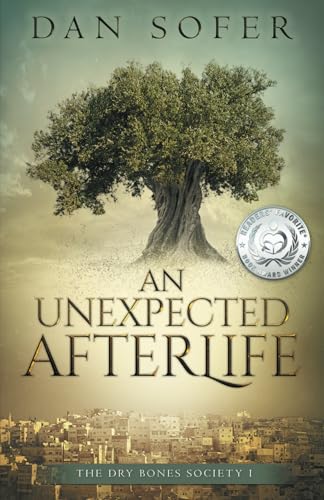
An Unexpected Afterlife
Dan Sofer — The Dry Bones Society, Book 1
Moshe Karlin wakes up in Jerusalem's Mount of Olives Cemetery with no memory of how he died and a brutal practical problem: he is back, but the state still considers him dead. While he tries to win back the wife he failed before his death, other returnees begin appearing across the city, and what should be a private miracle starts pressing against municipal systems, old prophecy, and the everyday friction of modern Jerusalem.
That blend is what makes this such a sharp fit for the theme. Dan Sofer brings sacred upheaval all the way down to street level, where resurrection has to survive traffic, bureaucracy, regret, humor, and the stubborn hope of a second chance. It is tense, warm, and unusually alive to the emotional cost of being given life back after you have already made a mess of it.
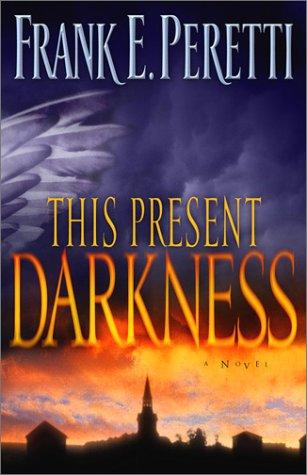
This Present Darkness
by Frank E. Peretti
Peretti imagines a small town where corruption, fear, and civic pressure are all tangled up with an unseen spiritual war. What keeps the novel gripping is not just the angel-and-demon machinery but the way that machinery bears directly on ordinary institutions: local government, journalism, prayer meetings, friendships, and the daily choices people make before they understand the scale of what they are caught inside.
View on Amazon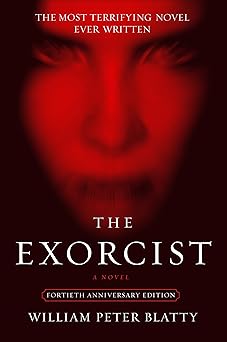
The Exorcist
by William Peter Blatty
Blatty's novel endures because possession does not arrive in a gothic nowhere; it enters an apartment, a family, a doctor's schedule, a priest's exhausted conscience. The horror lands through ordinary textures first, then deepens into a spiritual crisis neither medicine nor modern confidence can contain. If you want sacred terror that feels painfully immediate rather than mythic and remote, this remains one of the defining books.
View on Amazon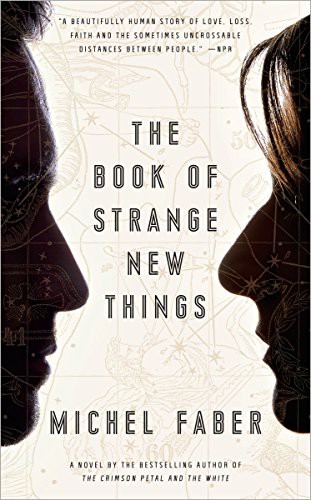
The Book of Strange New Things
by Michel Faber
Michel Faber takes a missionary story and turns it into something lonelier, stranger, and more intimate than readers often expect. The spiritual mystery matters, but so does the marriage stretched thin by distance, delayed messages, and the sense that revelation may be changing two people in radically different ways. It is a quieter book than the others here, but it understands with unusual force how the sacred can press hardest on private regret and domestic fracture.
View on Amazon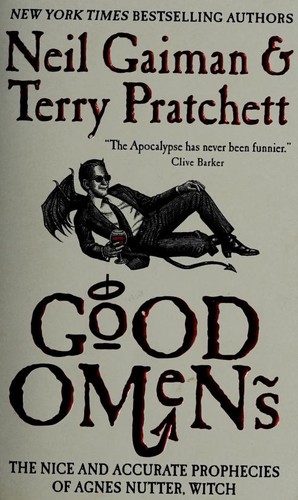
Good Omens
by Neil Gaiman and Terry Pratchett
The wry outlier on this list still belongs here because few novels make prophecy feel so entangled with daily human systems. Armageddon unfolds through misplaced files, bad planning, commuter habits, loyalties that have gone soft around the edges, and celestial administration that turns out to be almost as chaotic as earthly bureaucracy. If you like your sacred collisions sharpened with humor instead of dread alone, this is the obvious companion.
View on Amazon